What to Have Students Read When Interested in Earth Science
/https://tf-cmsv2-smithsonianmag-media.s3.amazonaws.com/filer/c1/9e/c19e0b1e-b470-4b48-857e-c93f7759a823/42-24506802.jpg)
Earth is a big topic, and getting a handle on our planet's complexity and variability can seem daunting. So we asked geologist Robert Yard. Hazen to select v great books that he thinks offer compelling insights into the bright "blueish marble" we call habitation. Here's what he recommends:
Our planet's epic story possesses power, poetry and a lot of important details, then my five books span genres. Charles Lyell's Principles of Geology and John Grotzinger and Tom Jordan's Understanding Earth are elegant, accessible textbooks written about two centuries apart. Andy Knoll'due south Life on a Young Planet and David Beerling'southward The Emerald Planet gloat the 4-billion-year co-evolution of Earth and life from the perspective of paleontology. Finally, John McPhee'south rhapsodic Annals of the Former Earth provides a poetic tribute to our dynamic domicile and the geologists who devote their lives to its study.
Principles of Geology, by Charles Lyell (1830-1833)
Though published more than 180 years ago, Lyell's Principles is a masterful statement for the veracity of deep time. Drawing on his skills as a lawyer as much as his scientific perceptions, Lyell lays out the case for the power of gradual processes operating over vast expanses of time to change the face of our planet. His lucid, compelling case that "the present is key to the past" greatly influenced many subsequent discoveries, including Charles Darwin's theory of evolution.
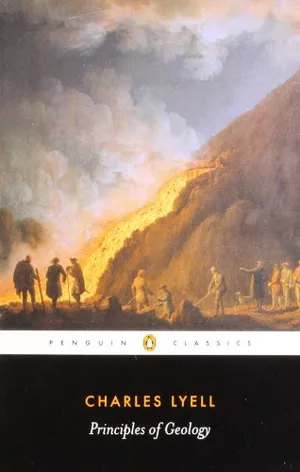
Principles of Geology (Penguin Classics)
Principles of Geology (Penguin Classics) [Charles Lyell, James A. Secord] on Amazon.com. *FREE* aircraft on qualifying offers. One of the central works in the nineteenth-century boxing between scientific discipline and Scripture, Charles Lyell'due south Principles of Geology (1830-33) sought to explain the geological state of the modern World by because the long-term effects of observable natural phenomena.
Understanding Earth, past John Grotzinger and Tom Jordan (2010)
At their very best, textbooks synthesize knowledge in new, informative ways. Understanding Earth is a archetype, covering the basics of geology, geophysics and ecology scientific discipline with stylish prose, classy illustrations and the insights of 2 great scientist educators (earlier editions were championed by Frank Press and Ray Siever, who began the franchise). It's a whirlwind tour of the mod science, from the microscopic view of rocks and minerals to the global sweep of plate tectonics.
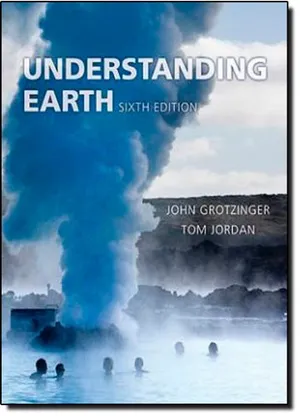
Understanding World
Agreement Earth [John Grotzinger, Thomas H. Jordan] on Amazon.com. *FREE* shipping on qualifying offers. In this sixth edition of Understanding Earth , students are encouraged to do what geologists do.
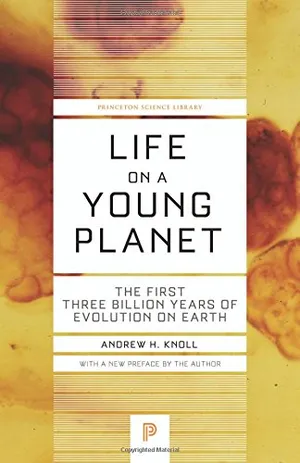
Life on a Immature Planet: The First Three Billion Years of Evolution on Earth, by Andrew H. Knoll (2003)
Harvard geobiologist Knoll vividly captures the dynamic field of Precambrian paleontology in this unique, zippy read. Personalities—both fossils and the people who study them—come alive as Knoll races across the eons. With episodes from life'south enigmatic origins, to scrappy contentious black smudges that might or might non exist the remains of cells to some of the most exquisite and revealing microfossils on Earth, Life on a Immature Planet takes its readers on a unique journey.
Emerald Planet: How Plants Changed Earth History, by David Beerling (2007)
All of us have a vision of what it means to be a vibrant, bluish-and-light-green "Earth-like planet." But our home has fit that familiar description for only the by 400 million years or so—a mere viii percent of its changeable history. Beerling'due south revealing Emerald Planet tells the surprising tale of the ascent of the terrestrial biosphere, every bit plants always so gradually established their foothold on dry country and became a major geological forcefulness. Who would take idea that roots and leaves hold such drama, but our existence and survival are intimately tied to those transformative innovations.
![Preview thumbnail for Emerald Planet How Plants Changed Earth's History by Beerling, David [Oxford University Press, USA,2007] [Hardcover]](https://th-thumbnailer.cdn-si-edu.com/kAxnD2l8Jrz3SE3LOs5lUT1G9V4=/fit-in/300x0/https://tf-cmsv2-smithsonianmag-media.s3.amazonaws.com/embedly/embedly_image_84bdcaac36b014a08577faa0ae223a5fb3dbdb07.jpg)
Annals of the Quondam Earth, by John McPhee (1998)
New Yorker writer McPhee captures the romance and drama of geology similar no other. His Annals, written over two decades every bit he traveled the breadth of N America in the company of articulate, passionate geologists, is unique in the literature of science. OK, I acknowledge that this is a bit of a cheat, as Annals collates iv of McPhee's before books from 1981 to 1993 into a unmarried massive tome. But what mastery! Savour every page.
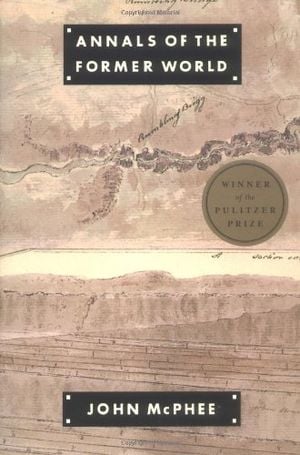
Register of the Former World
Annals of the Former World [John McPhee] on Amazon.com. *FREE* shipping on qualifying offers. The Pulitzer Prize-winning view of the continent, across the fortieth parallel and downwards through 4.6 billion years Twenty years agone
Robert Thousand. Hazen is a senior staff scientist at the Carnegie Institution of Washington's Geophysical Laboratory and the Clarence Robinson Professor of Earth Science at George Mason University. He received his B.S. and Due south.K. in geology at the Massachusetts Institute of Applied science and his Ph.D. in Globe science at Harvard University. His near recent book isThe Story of Earth: The Beginning 4.5 Billion Years from Stardust to Living Planet(Viking-Penguin, 2012), which explores the intricate co-evolution of the geosphere and biosphere.
Source: https://www.smithsonianmag.com/science-nature/five-must-read-books-about-planet-earth-180954718/
/https://tf-cmsv2-smithsonianmag-media.s3.amazonaws.com/filer/c1/9e/c19e0b1e-b470-4b48-857e-c93f7759a823/42-24506802.jpg&description=What to Have Students Read When Interested in Earth Science)
Postar um comentário for "What to Have Students Read When Interested in Earth Science"